
Music Therapy

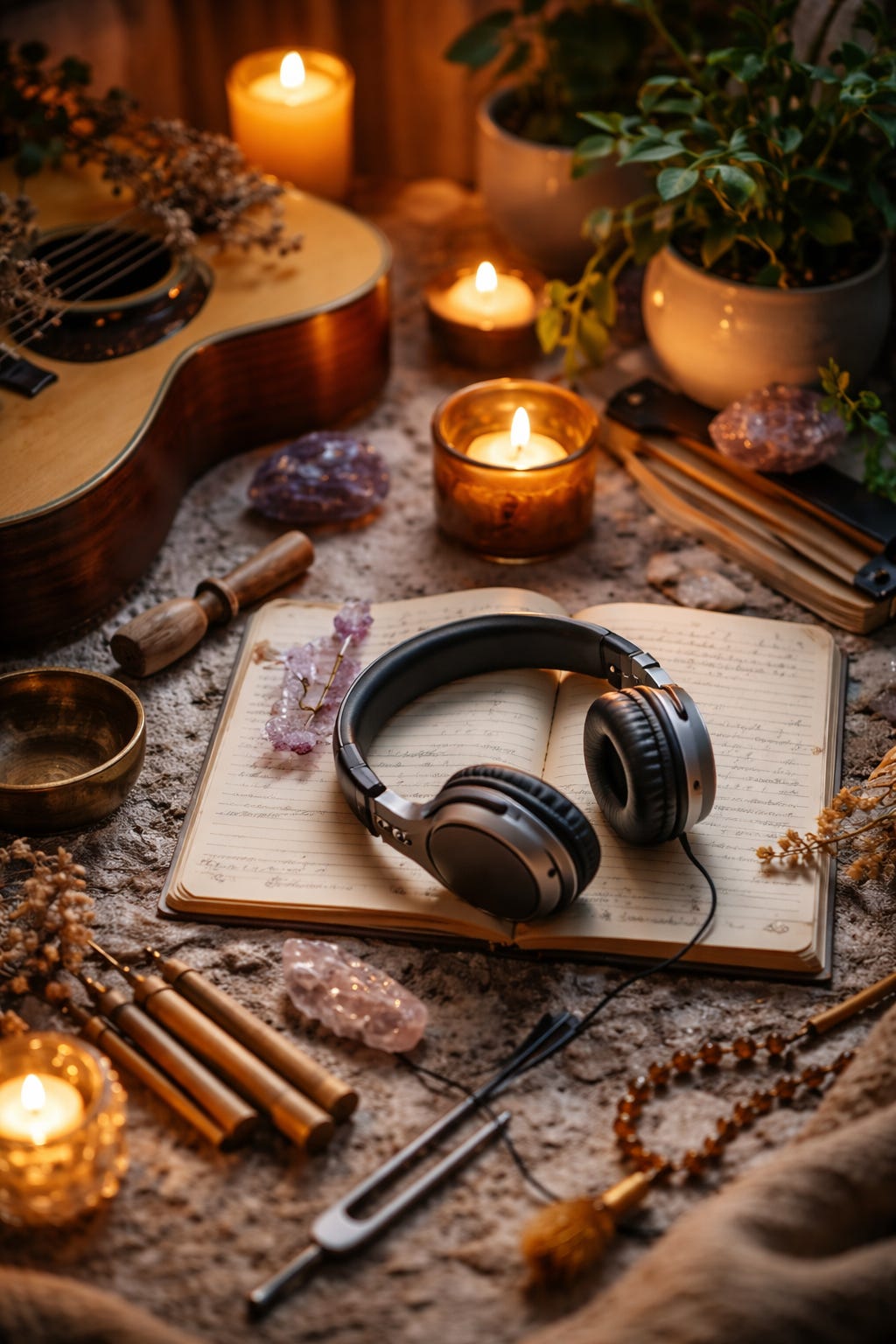
Music has always been therapy for me. In my younger years I played the saxophone and piano as a way to express myself. I also loved to just listen to music. I am old enough to remember recoding songs off the radio onto a cassette so I could listen whenever I wanted. Maxing mixed tapes of my favourite songs.
My taste in music has changed a lot over my life. I grew up with Triple J and alternative rock. But my parents listened to 2WS on the radio which was old school rock from the 50s, 60s and 70s. Hence my love of the Beatles, Rolling Stones and Joan Jett. Even now my taste in music is pretty varied. My playlists include angry feminist rage music, Taylor Swift, Pagan music, nordic/viking music, alternative rock, as well as a few covers. Sound of Silence by Disturbed will always be a favourite.
Thanks to the ease of Spotify, I have playlists for my different moods. When I am angry or depressed, I bring out my dark playlist. Lots of depressing, angry songs that I can relate to in the time. I have my Taylor Swift playlist for when I am feeling great, but with a touch of feminine rage. I have my complete feminine rage playlist, for usually after a breakup or I am really done with the patriarchy. There is the playlist for when I am working out. There is a playlist for manifesting, my witchy playlist and my meditation playlist.
The most important is when I need to really feel something. I really like music that I can feel. Something with a lot of bass and drums that vibrate through me when I listen to it. That kind of music for me seems to be the most healing.
And over time, I’ve realised this isn’t just a personal quirk or a comfort habit. It’s something much deeper. It’s what therapists call music therapy, even though I was practising it long before I knew it had a name.
Music therapy is not just “listening to nice songs.” It is the intentional use of sound, rhythm, melody, and vibration to support emotional, psychological, and even physical healing. Sometimes it looks like working with a trained therapist. Sometimes it looks like sitting alone in your room with headphones on, letting a song crack you open in exactly the right place.
It works because music speaks the language of the nervous system.
Before our minds can explain things, before words can make sense of pain, our bodies already know. They hold tension. They hold memory. They hold grief and joy and fear and longing. Music slips past logic and goes straight there. It reaches the places that talk therapy sometimes can’t touch.
When I put on a song that matches my mood, something shifts. If I’m angry, the music gives my anger somewhere to go. If I’m sad, it lets me cry without needing to justify it. If I’m overwhelmed, slow rhythms and soft melodies gently bring my breathing back into rhythm. It’s like my body remembers how to regulate itself again.
That’s one of the core benefits of music therapy. It helps calm the nervous system. It can lower stress hormones, slow the heart rate, and soften anxiety. It reminds the body that it is safe, even when life feels chaotic.
There is also the emotional release.
Some feelings don’t want to be spoken. They want to be sung, hummed, drummed, or dissolved into sound. Music gives permission to feel without explanation. You don’t have to tidy it up. You don’t have to make it palatable. You can just feel it, fully, honestly, and then let it move through you.
For people who carry trauma, grief, or long-held emotional weight, this is powerful. Music becomes a container. A place where the heaviness can rest for a while instead of living in your chest.
Then there is the memory element.
Certain songs hold entire chapters of our lives. A relationship. A season. A version of ourselves. When we listen again, we don’t just hear sound. We re-enter those moments. Sometimes that’s painful. Sometimes it’s healing. Often, it’s both. But revisiting those emotional landscapes in a safe way can help us integrate our past instead of running from it.
Music therapy also supports creativity and self-expression.
When I played instruments as a kid, I didn’t think of it as “processing.” I was just playing. But looking back, I was learning how to translate emotion into sound. How to turn inner chaos into something structured and beautiful. That skill never really leaves you. Even now, choosing a song that matches my inner world feels like a form of emotional literacy.
And then there is the physical aspect. The vibration. The bass. The drums.
Sound is not just something we hear. It is something we feel in our bones, our muscles, our skin. Deep rhythms can ground you. Repetitive beats can steady you. Low frequencies can feel like being held by the earth itself. When I say certain music heals me, I mean it literally moves through me and rearranges something.
It’s why I’m drawn to music with depth. With texture. With pulse. Music that doesn’t just sit politely in the background, but enters the body and says, I’m here. You’re here. We’re alive.
In professional settings, music therapists use all of this intentionally. They may help people manage anxiety, depression, chronic pain, PTSD, neurological conditions, or emotional regulation. They use listening, songwriting, improvisation, movement, and breath alongside music. It’s holistic. It treats the person, not just the symptom.
But you don’t need a clinic to experience its magic. Every time you build a playlist for your mood, you are practising self-directed therapy. Every time you use music to get through a hard day, a heartbreak, a workout, or a quiet evening alone, you are tending to your nervous system. Every time you let a song hold you when words fail, you are choosing gentleness over suppression.
Music has been my companion through so many seasons. Through becoming. Through breaking. Through rebuilding. Through learning who I am again and again.
It has met me in rage and soothed me in sorrow. It has celebrated me in joy and anchored me in uncertainty. It has reminded me that even when I feel disconnected from myself, rhythm and sound can lead me home.
And maybe that’s the real gift of music therapy. It doesn’t fix you. It reminds you that you were never broken.