

Angela Blue Thunder
The Woman Who Refused to Bow

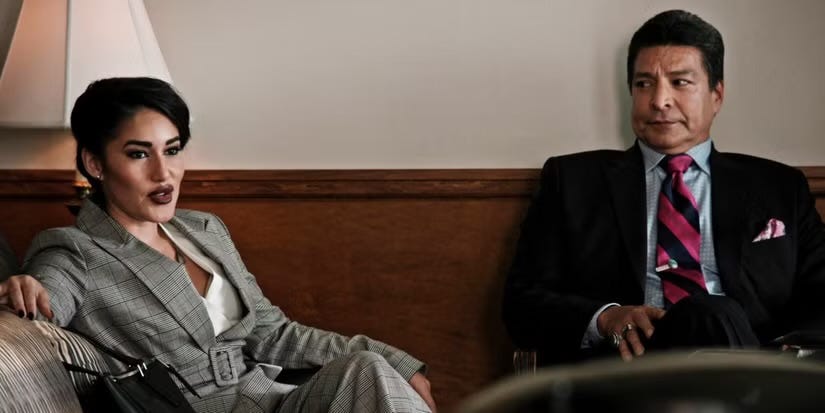
There are women who ask for permission.
And then there are women like Angela Blue Thunder.
From the moment she walks onto the screen in Yellowstone, she carries herself with a certainty that makes everyone else seem as though they are merely visiting the room. She doesn’t seek approval. She doesn’t soften her words. She doesn’t dilute her anger so that powerful men can feel comfortable in her presence. She simply tells the truth.
In a television landscape where women are often expected to choose between being compassionate or powerful, Angela refuses the false choice. She is both. I am very impressed with Taylor Sheridan’s ability to create such intense, strong female characters.
She is intelligent enough to understand the legal system. Wise enough to understand history. And angry enough to know that neither has ever truly been neutral. Angela’s rage is not impulsive. It is inherited.
It is the accumulated weight of generations who watched promises broken, treaties ignored, land stolen, and culture dismissed. Her anger is not born from wounded pride. It is born from memory.
That is what makes her such a fascinating character. She understands something many people never do. Power rarely gives itself away willingly.
Throughout Yellowstone, Angela constantly challenges Thomas Rainwater to think beyond playing by rules that were never designed to protect Indigenous people. She isn’t interested in appearing reasonable if “reasonable” simply means accepting another loss with grace. She asks difficult questions about justice, sovereignty, and survival, forcing everyone around her to confront uncomfortable truths.
One of my favourite moments comes during the Season Three finale.
The room is filled with people who believe money is the ultimate weapon. Corporate executives. Politicians. Lawyers. Men who assume influence can be bought, negotiated or intimidated.
Roarke Morris sits comfortably in that world. He speaks with the confidence of someone who believes his corporation is simply too large to lose. Then Angela speaks. When Roarke casually wishes her luck with the inevitable legal battle, she doesn’t raise her voice. She doesn’t threaten him. She simply reminds him of who she represents. She points to the successful fight to stop wolf hunting and calmly tells him that if her people could achieve that, what do they think they will do to an airport?
“We don’t need luck.”
“See you in court.”
It is one of the most satisfying moments in the entire series. Because confidence isn’t always loud. Sometimes confidence is knowing exactly who you are. Angela never tries to convince Roarke that she deserves respect. She behaves as though respect is already hers. That quiet certainty is devastating.
She understands something Roarke never does. Corporations measure success in quarterly profits. Nations measure success in generations. Angela isn’t fighting for a promotion. She is fighting for ancestors she never met and descendants she will never know. That changes everything.
What I admire most about Angela Blue Thunder is not simply her strength. It is her refusal to apologise for possessing it. Women are often taught to package conviction inside politeness. To make criticism sound gentle. To smile while delivering uncomfortable truths. Angela rejects all of that. She is direct. Strategic. Fearless.
She occupies space without asking whether anyone else feels comfortable. And perhaps that is why she unsettles so many people. Not because she is cruel. But because she is impossible to manipulate.
There is a particular kind of feminine power that isn’t rooted in nurturing or softness. It is rooted in boundaries. In memory. In justice. In refusing to abandon yourself simply because someone wealthier, louder or more powerful tells you to. Angela Blue Thunder embodies that power.
She reminds us that feminine rage is not something to suppress. When it is guided by wisdom, purpose and integrity, it becomes something transformative. Not destruction for its own sake. But the refusal to let injustice become normal.
In a world that still encourages women to stay agreeable, Angela offers another possibility. Stand up. Speak clearly. Know your history. Know your worth. And never confuse silence with peace. Sometimes the most courageous thing a woman can do is refuse to bow.